
insights
Why home healthcare’s next big wave is ‘digital labor,’ not more software
Home healthcare doesn't have a software problem, it has an administrative labor problem. Here's the right AI solution.
By Kunal Sarda · Apr 20, 2026
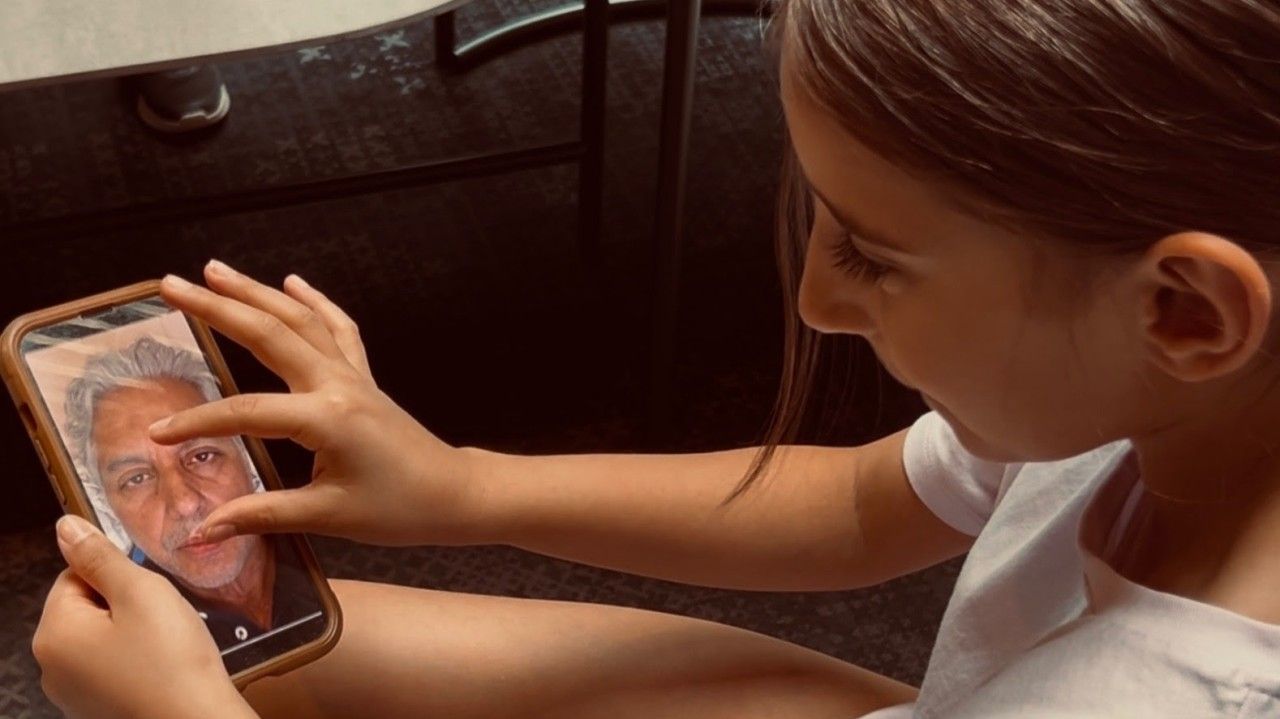
Yesterday, I used an aging filter to show little Arya what I'd look like at seventy. She was amused, till I asked her how she'd take care of me when I inevitably got sick. She looked at me and said, "We'll find you a nurse." I told her I hoped she would. Then I realized how impossible it was to explain everything that has to happen before a caregiver ever walks through the door. An army of people, working tirelessly behind the scenes, making any care possible at all.
Every family knows who cared for their loved one. Almost none of them know who made that care possible.
The patient meets the nurse. The aide. The therapist who shows up on a Tuesday to help them stand again. Those are the people care is made of, and they are the reason anyone chose this work in the first place. But behind each of those visits is a second set of people the patient will never see. The scheduler who found someone to cover the shift when the assigned aide called out at six in the morning. The intake coordinator who turned a hospital discharge into an admitted patient before lunch. The recruiter who spent three weeks and ninety phone calls finding that aide in the first place. The compliance administrator who caught the expiring lice nse before it quietly cancelled tomorrow's visits.
None of them touch the patient. Yet all of them determine whether the patient gets touched at all.
I've spent the last few years inside these organizations, and the thing that struck me was not how hard the clinical teams work. I expected that. What struck me was how large the other group had become. The group whose entire job is to make care possible. Every organization has one. Nobody talks about it. And it is enormous.
It didn't get this way on purpose. It got this way the way most complicated things do, one reasonable addition at a time. A new regulation. A new payer rule. A new portal, a new form, a new verification step, a new phone call. Each one made sense on its own. EacH one needed a person. And slowly, without anyone ever deciding it, healthcare built an entire layer of work that sits between the caregiver and the person they came to care for.
Nobody comes into healthcare because they love that layer. Schedulers don't become schedulers because they enjoy moving boxes around a calendar. Recruiters don't wake up excited to leave fifty voicemails. Intake coordinators don't dream in PDFs. They came into healthcare for the same reason the caregiver did. To help people.
Administration simply became the thing standing between them and the reason they came.
Here is what that layer actually does, and it is more than most people think. We usually describe it in the language of time. It costs hours. It slows things down. But time is the least interesting thing it takes. What it really does is change people.
Give a person who came to help enough administrative work and it slowly rewrites who they are. Not in a dramatic way. In a quiet, cumulative way, until one day the job they are doing is not the job they signed up for.
The scheduler who started as a caregiver's advocate becomes a logistics engine, measured by whether the boxes are filled rather than whether the caregiver is okay. The intake coordinator who wanted to get patients seen becomes a document processor, judged by how fast the referral moves rather than whether the patient does well. The recruiter who wanted to build a team becomes a voicemail machine, counting dials instead of people.
Nobody chose that drift. The work chose it for them. And it happened so gradually that most of them could not tell you the day they stopped being who they came to be.
Now here is the part I can't stop thinking about. We describe healthcare as one workforce, the people who give care. But every organization runs two. One delivers care. The other exists entirely to make care possible. And we have never once called the second one what it is.
It has no name. On the org chart it appears only as departments. Scheduling. Recruiting. Intake. Compliance. We look at each box on its own and never step back far enough to see that together they form a single workforce, nearly as large as the clinical one and just as essential to a patient getting care. A second workforce, hiding in plain sight, holding the whole thing up.
Nobody built it on purpose. It accumulated, one requirement at a time, until a huge share of the people in healthcare spend their days not giving care but making it possible. And it grows in a way no other workforce does. Every new regulation, every new payer rule, every new portal adds work, and the work rarely arrives with new people to do it. So it gets absorbed. Into longer days, into weekends, into the hours of people who were supposed to be doing something else. The second workforce expands by taking hours, not by adding headcount. Add more people and the requirements find them too, and for thirty years it has been quietly winning.
Once you see it this way, the numbers stop being statistics and start being symptoms.
Nurses now spend close to 40% of their shift on documentation. For every hour a clinician spends with a patient, research finds nearly two more hours go to the record and the desk. That is how heavy the administrative load has become. It no longer stays in the back office. It reaches all the way to the bedside.
You can see it in who leaves. Caregiver turnover ran 75% last year, and nearly four out of five who leave are gone within their first hundred days. People rarely quit caring. They quit the second job. Every departure creates even more work for the second workforce. Another search, another onboarding, another stack of paperwork. The harder the first workforce is to keep, the harder the second one has to run.
And you can see it in who never gets seen. By late 2022, home health agencies were turning down 76% of the patients referred to them, up from 54% in 2019. Most of those rejections came down to one thi ng. Not enough people, and the people they had were buried. Every declined referral is someone who left a hospital and waited for care that sometimes never came, because the second workforce could not keep up.
For the last two years, the industry has looked at all of this and asked a productivity question. How many hours can we save? How many calls can we automate? How many clicks can we remove? Those are real questions. They are just not the first one. Saving an hour means nothing until you know what you are giving it back for. And the longer I spent inside these organizations, the more convinced I became that the real question was different.
Not how do we make the second workforce faster.
What if the work didn't have to fall on people at all?
Here is why no software ever fixed this.
Software inherited the org chart.
Every healthcare organization has always been drawn the same way. A box for scheduling. A box for recruiting. A box for intake. A box for compliance. When software arrived, it did the most natural thing in the world. It built one product for each box. So today every agency owns a scheduling system, a recruiting system, an onboarding system, a compliance module, an intake tool, a payroll platform.
Each one solves a department. None of them solve the workforce.
That is why buying more of it never felt like relief. You were not hiring a team. You were buying a dozen products that don't talk to each other to do the job of one. The category was never scheduling. The category was always the workforce. We just couldn't see it, because software kept handing us back the org chart.
That is the whole idea behind what we've been building at Arya, though it took us years to say it this plainly. For most of our life we described ourselves by our products. An AI scheduling agent. Then a recruiting agent. Then intake, compliance, onboarding, payroll. The list kept growing and the answer kept getting longer and, oddly, less true.
Because we realized we weren't defining ourselves by software categories anymore. We were building the second workforce. Every healthcare organization already has one. We decided to build one that never gets tired, never forgets, and never takes time away from a patient.
Once we saw it that way, every product decision became obvious. We didn't add a scheduling product. We taught the second workforce how to schedule. We didn't launch a compliance module. We taught it to keep a license from lapsing over a weekend. We weren't expanding into new categories or adding new headcount. We were teaching one workforce a new skill each time. Scheduling and compliance were never different products. They were different things the same workforce learned to do. A team that sits alongside the caregivers and the coordinators and never once takes an hour away from a patient to fill out a form.
The demand for all of this is not slowing down. The country will need to fill an estimated 9.7 million direct care jobs between 2024 and 2034, more than any other single occupation in America, while the population over 65 grows by more than half by 2060. There will not be enough people. There has never been a realistic plan for enough people. The only math that works is to stop asking the people we have to spend their days on work that was never the reason they came.
The defining healthcare organizations of the next decade won't win by delivering slightly better care. They will win by building organizations where the majority of their people's energy goes to caring for other human beings instead of moving information between systems.
If AI succeeds in healthcare, it won't be because it replaced the people who cared. It'll be because it finally took the work that stood between them and the reason they came.
The second workforce has always had to be human. Until now.
The patient will never meet ours. That was always the point.
Home healthcare doesn't have a software problem, it has an administrative labor problem. Here's the right AI solution.
By Kunal Sarda · Apr 20, 2026

The job flipped: engineers now review AI-generated code more than they write it. A framework for model tiering, guards, and review triage.
By Anand Chandrasekaran · Apr 17, 2026


